
Unlocking Team Potential: The Power of an Ownership Culture
Why Ownership Culture Matters
Too many teams operate in a mode where work is assigned, completed, and reported back with little thought beyond the task at hand. On the surface, everything is fine. Deadlines are met, updates are given, but deeper engagement is missing. Because you are not investing in developing your team members. The result is good performers leaving the organization.
This is what happens when a culture of ownership doesn’t exist. Team members do only what’s necessary to get by. Productivity stalls. Innovation slows. And sooner or later, your top performers walk out the door.
That’s why creating an ownership culture is no longer optional: It’s the leadership lever that unlocks true potential. But cultivating this culture doesn’t happen by chance. It requires clear intention, consistent effort, and leaders who model what ownership looks like.
Coaching Mindset for Ownership Culture
Ownership doesn’t begin with processes: it begins with mindset shifts. Leaders who want true ownership must shift from directing to coaching.
Recognize the ripple effect. Your actions as a leader either reinforce accountability or erode it. Micromanagement signals distrust; empowerment signals belief.
Move from answers to questions. Instead of solving every problem, ask powerful questions that help your team think critically and take responsibility for solutions.
Invest in growth. Coaching isn’t about telling someone what to do—it’s about helping them see their potential and choose to step into it.
This shift requires patience and humility, but it’s the foundation of a culture where people choose to own outcomes.
Organizational Culture Structure
Think of organizational culture as an inverted pyramid. At the base are senior leaders, setting direction and creating conditions for success. At the top are the people closest to customers and problems, where ownership and initiative are most critical.
In this structure:
Leaders develop, rather than command.
Authority is modeled as responsibility, not control.
Teams mirror what they see - if leaders demonstrate ownership, accountability, and adaptability, teams will follow.
When leaders live the behaviors they want to see, ownership cascades through the organization.
Building Blocks of Ownership Culture
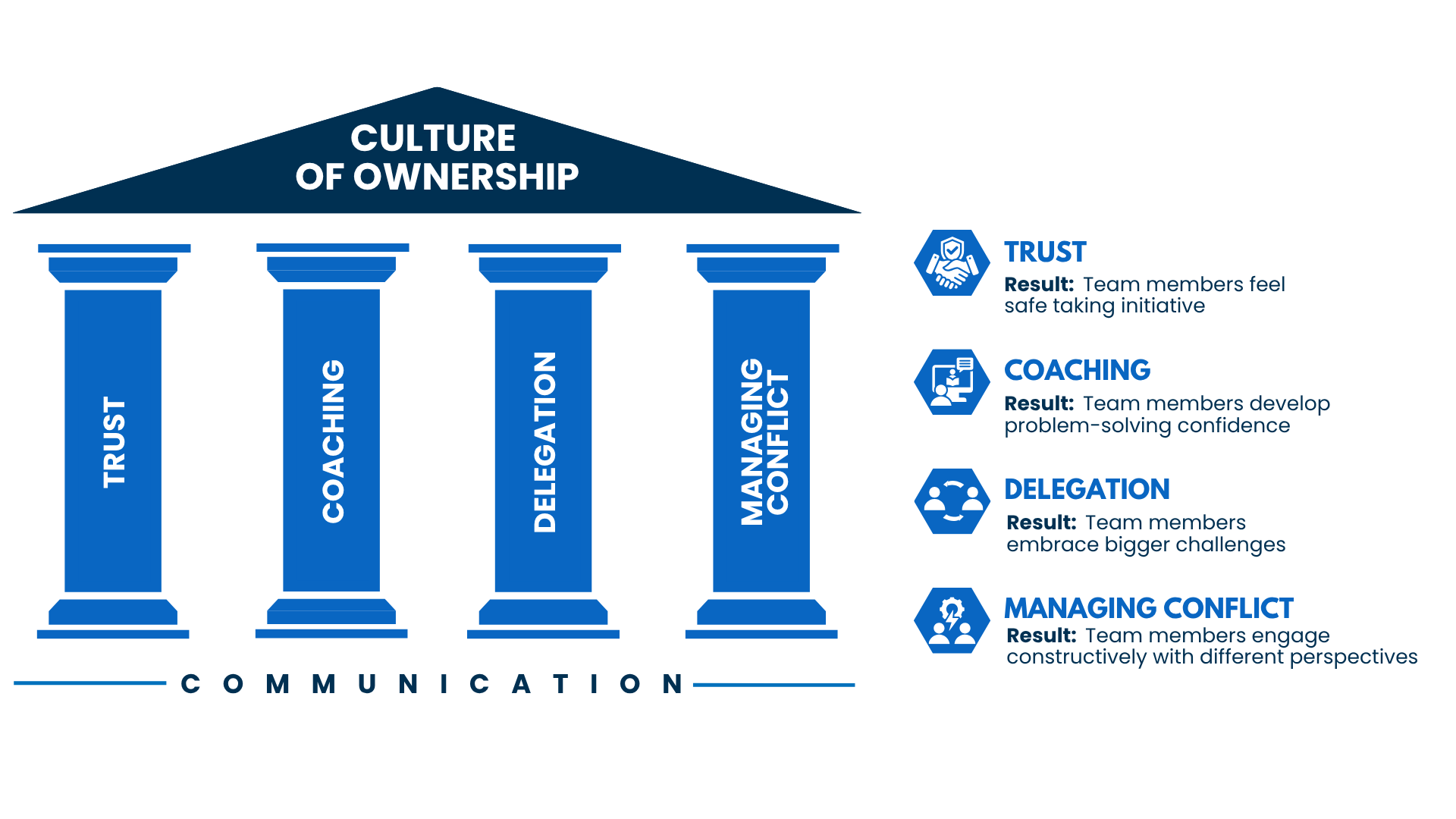
From years of research and practice, four key building blocks consistently emerge:
Fostering Trust – Without trust, accountability feels like punishment. With trust, it feels like empowerment.
Coaching to Optimize Performance – Feedback and support help team members grow into self-reliant, engaged contributors.
Delegating with Intention – True delegation empowers people to own outcomes, not just tasks.
Managing Conflict Proactively – Addressing issues early preserves trust and keeps teams focused on shared goals.
Each of these skills requires effort. But when woven together, they create a culture where people don’t just work, they own results.
Benefits for Leaders
Cultivating a culture of ownership not only benefits your team but also significantly enhances your own leadership success. By empowering your team, you:
Free up valuable time and mental bandwidth: You can focus on strategic initiatives, long-term planning, and developing your own leadership skills.
Drive career advancement: Successfully leading and developing high-performing teams is a key factor in career progression.
Reduce stress: Micromanaging and constant firefighting can be incredibly stressful. Empowering your team allows you to operate more strategically and reduces your overall workload.
Enhance your reputation: Demonstrating trust and empowering your team members showcases your leadership skills and builds a strong reputation within your organization.
Real Results from Real Changes
I’ve seen leaders transform their teams by embracing ownership. One manager shifted from micromanaging to intentional delegation. Within weeks, team members began raising ideas instead of waiting for instructions. Another leader adopted a coaching mindset in 1:1s, and suddenly, engagement spiked because people felt heard and valued.
The difference wasn’t in the talent; it was in the culture. Because they changed their mindset and took ownership, the result was promotion and recognition within the organization.
Final Thought
Creating a culture of ownership isn’t about adding more rules or pushing harder for accountability. It’s about cultivating an environment where people choose to commit because they feel trusted, supported, and empowered.
When leaders model ownership and coach for it, they unlock what’s been there all along: a team ready to perform at its highest level.
What’s Next?
Unlocking your team’s potential starts with creating a culture of ownership where employees feel empowered, accountable, and engaged.
If you’re looking to unlock and strengthen your team’s potential, I can help you build a tailored strategy that drives lasting results.