
“You need to be more strategic”: What That Actually Means
You're in your performance review, and your manager says it. The phrase that makes your stomach drop: "You're doing great work, but you need to be more strategic."
You nod. You take notes. You walk out of that room with zero clue what they actually mean: Or how to fix it.
If this has happened to you, you're not alone. "Be more strategic" is one of the most common pieces of feedback leaders receive. It's also one of the most frustrating because nobody ever explains what strategic thinking actually looks like or how to develop it.
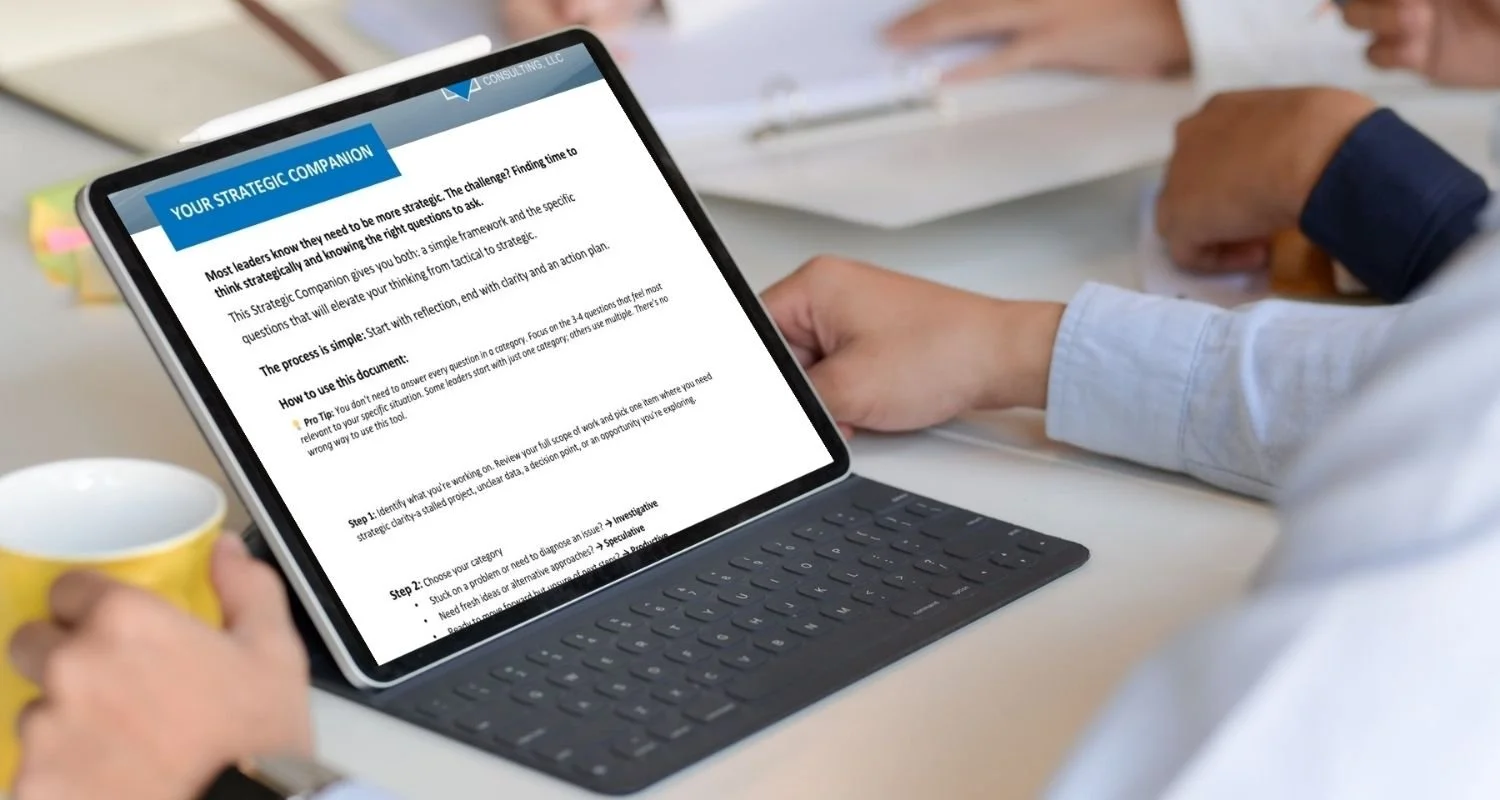
Here's what I know from coaching hundreds of leaders: Strategic thinking isn't some magical trait you're either born with or not. It's a learnable skill, and you can get started today with 👉Your Strategic Companion.
The difference between leaders who develop strategic thinking and those who don't can determine who gets promoted and who stays stuck.
Why “Just Be More Strategic” is Terrible Advice
Your boss tells you to think more strategically. Great. But what does that actually mean on a Tuesday morning when you're drowning in emails and back-to-back meetings?
Most leaders struggle with strategic thinking for two particular reasons:
First, they don't have time to think beyond the day-to-day. When you're sprinting from one urgent task to the next, there's no mental space to zoom out and see the bigger picture. Strategic thinking feels like a luxury you can't afford.
Second, even when they carve out time, they don't know which questions to ask. You sit down with the intention of "being strategic," but you stare at your notes with no framework for where to start. So, you give up and go back to executing tasks because at least you know how to do that.
This is the trap that keeps talented leaders from advancing. You're excellent at execution. You get things done. But without strategic thinking skills, you hit a ceiling.
The Brutal Truth About Career Advancement
Here's what nobody tells you: Good doers are everywhere. Every organization has competent people who can execute tasks, meet deadlines, and deliver quality work. They're a dime a dozen.
What's scarce? Leaders who can look beyond what needs to be done right in front of them. People who can see the big picture, identify strategic opportunities, and connect the dots between today's decisions and tomorrow's outcomes.
That's the skill that gets you promoted. That's what separates directors from managers, VPs from directors, and executives from everyone else.
And here's the uncomfortable part: Your career advancement will slow down or completely stall without this skill. Not because you're not working hard enough. Not because you're not smart enough. But because organizations desperately need strategic thinkers, and if you're not developing that muscle, someone else is.
Why Most Leaders Never Develop Strategic Thinking
Most people assume strategic thinking is about having brilliant insights or being naturally visionary. It's not.
Strategic thinking is about asking better questions.
That's it. That's the secret. The leaders who seem naturally strategic aren't doing some complex mental gymnastics. They've simply learned which questions to ask when facing a challenge, exploring options, or making decisions.
The problem is, nobody teaches you these questions. You're expected to figure it out on your own. So most leaders never do.
Strategic Thinking Isn’t About Working Harder
The good news? Strategic thinking doesn't require adding more hours to your already packed schedule. It's not about working harder, it's about thinking differently.
You don't need to attend expensive seminars or get an MBA. You need a practical framework and the right questions to ask. That's what actually moves the needle.
Most of the strategic leaders I work with spend just one focused hour per week on strategic thinking. That's it. One hour to step back, ask powerful questions, and map out their approach.
But it's the right hour. With the right structure. Asking the right questions.
The Framework That Actually Works
Effective strategic thinking follows a simple pattern across four categories of questions:
Investigative questions help you understand the real problem or opportunity in front of you. Before you can be strategic, you need clarity on what you're actually dealing with.
Speculative questions help you explore possibilities and options. This is where you get creative about different paths forward without committing to one yet.
Productive questions help you make decisions and take action. Once you've explored options, these questions help you choose the best path and create a plan.
Interpretive questions help you learn from outcomes and refine your approach. Strategic thinking isn't just about planning, it's about getting smarter over time.
When you work through these four categories systematically, strategic thinking stops feeling mysterious. It becomes a repeatable process you can apply to any challenge, and it becomes easier with 👉Your Strategic Companion.
What Changes When You Think Strategically?
When leaders develop strategic thinking skills, I watch everything shift:
They stop getting caught off guard. Instead of constantly reacting, they start anticipating. They see challenges coming and have plans ready.
They make better decisions faster. Because they're asking the right questions upfront, they gather the right information and avoid analysis paralysis.
They get noticed. Senior leaders pay attention when someone consistently brings a strategic perspective to conversations. It signals readiness for bigger roles.
They feel more confident. There's a different energy when you know you're not just executing tasks, you're shaping direction.
Their teams perform better. Strategic leaders create clarity for their teams, which leads to better execution across the board.
One Hour Per Week Can Change Your Career
Imagine having a framework that guides you through strategic thinking in just one hour per week. Not theory or fluff — but a practical tool with the exact questions to ask when you're:
Stuck on a complex problem and need clarity
Exploring different options and trying to evaluate them
Ready to make a decision and create an action plan
Looking back at results to learn and improve
That's what 👉Your Strategic Companion gives you. It's a proven framework with 20+ powerful questions across all four categories of strategic thinking—Investigative, Speculative, Productive, and Interpretive.
Inside, you'll discover:
A simple 4-step process to apply strategic thinking to any challenge you're facing
The exact questions to ask at each stage so you never waste time wondering what to think about
A practical template to capture your insights and turn them into an actionable plan
This isn't another leadership book you'll skim and forget. It's a working tool designed for leaders who want to develop strategic thinking skills right now—not someday.
Your Next Move
You already know how to execute. You've proven you can get things done. Now it's time to develop the skill that will actually advance your career: Strategic Thinking.
Don't wait for your boss to tell you to be more strategic. Don't wait until you realize this gap is holding you back. Start building this muscle today.
Most leaders have to work intentionally to grow their strategic thinking capability. It doesn't just happen. But with the right framework and the right questions, you can develop it faster than you think.
Get Your Strategic Companion and start thinking strategically in just one hour per week.
Because good doers are common. Strategic thinkers are the ones who lead.
Learn more about how to develop these essential skills through my Creating a Culture of Ownership program so you can empower your team and achieve remarkable results.
And don’t forget to like and subscribe to my YouTube channel for more leadership insights and practical advice.